
The New Era of Private Dining
Why the most memorable restaurant experiences are becoming less concerned with spectacle and more attentive to the people gathered around the table.
By Wexton House Editorial
4–5 minutes
- Edition
- 9 October 2026
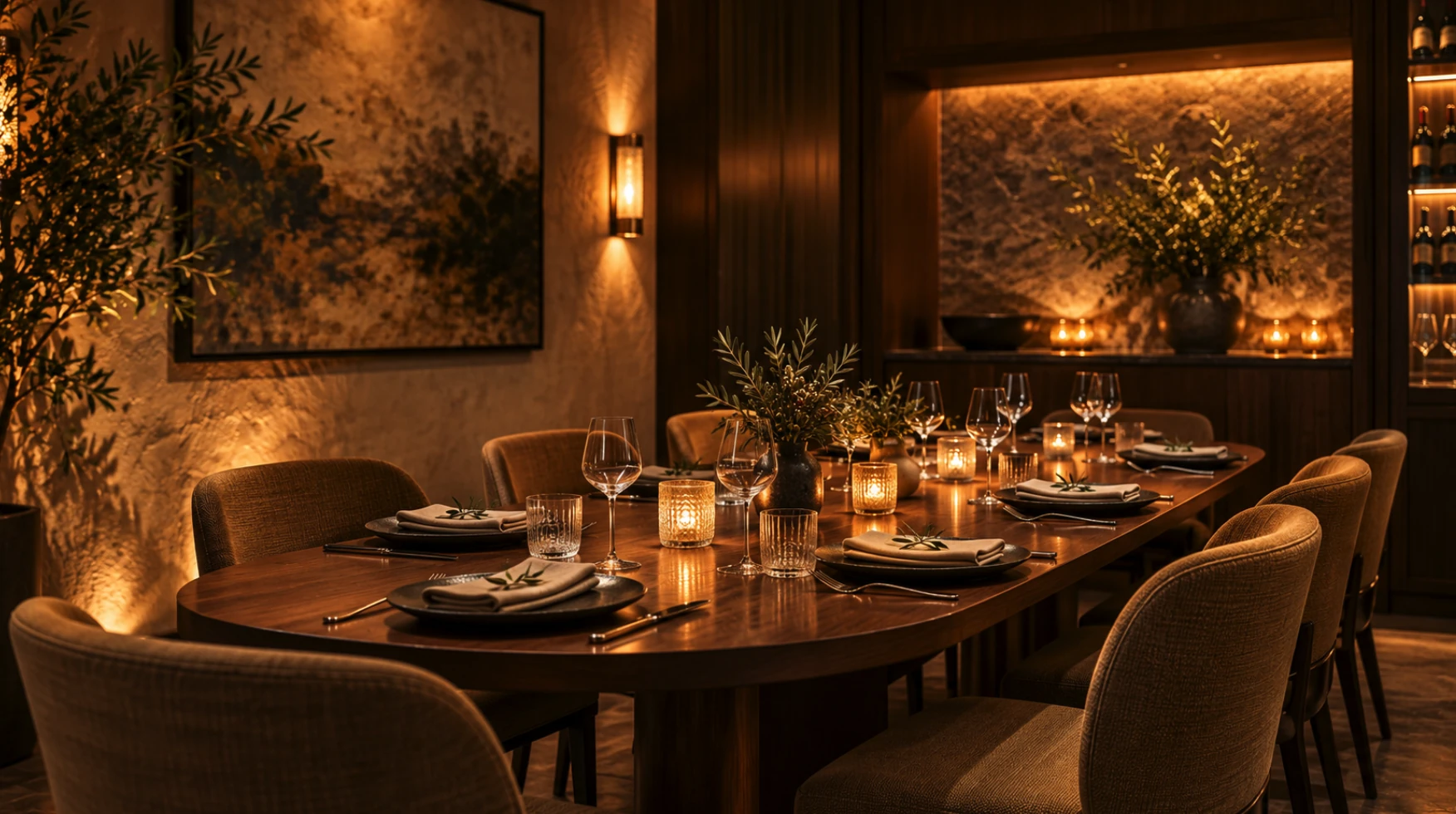
There is a particular pleasure in entering a restaurant and discovering that someone has already considered how the evening ought to unfold.
The table is ready. The lighting is comfortable. A server knows the occasion without needing to ask, and the conversation begins without competing with the noise of an unfamiliar room. Nothing about the experience demands attention, yet its quality is apparent almost immediately.
Private dining has long occupied an established place in the restaurant business. Distinguished establishments have maintained separate rooms for generations, while hotels have hosted private celebrations for considerably longer. What is changing is how these experiences are being presented and valued.
For some restaurants, private dining is no longer simply an accommodation for larger groups. It has become an experience in its own right.
A More Personal Occasion
In September 2025, OpenTable introduced a dedicated marketplace for private and group dining, reflecting growing commercial interest in experiences beyond the conventional restaurant reservation.
The company's research revealed an interesting preference among diners. Of Americans surveyed who had participated in a restaurant booking for ten or more people within the preceding five years, 72 percent preferred hosting a group dinner at a restaurant rather than at home. Another 66 percent indicated a willingness to spend more per person for a private or group dining experience.
Although these findings represent a specific segment of consumers, they illustrate the appeal of an evening in which the responsibilities of hosting are entrusted to someone else.
A significant birthday, an anniversary, or a gathering of old friends carries expectations that an ordinary dinner may not. The host wants guests to feel comfortable without spending the evening managing the occasion.
A thoughtful restaurant makes that possible.
The attraction is not necessarily extravagance. More often, it is the freedom to enjoy the company of those around the table.
The Value of a Room Apart
Restaurants are social places by nature, but the energy that makes a lively dining room enjoyable can become a distraction when an occasion calls for something more personal.
A private room changes that relationship.
Conversation can develop without interruption. Seating arrangements can accommodate the gathering rather than the dimensions of an available table. Service can follow the natural rhythm of the evening, particularly when menus and other arrangements have been settled in advance.
Yet privacy alone does not guarantee a memorable experience.
An isolated dining room with indifferent service is simply an isolated dining room. What distinguishes exceptional hospitality is the ability to anticipate what guests need without constantly reminding them that someone is attending to those needs.
A water glass is replenished discreetly. A course arrives when the conversation allows it. A guest returning to the table is given a moment before service resumes.
These are modest details, but their cumulative effect can define the evening.
Personalization also requires judgment. Knowing the occasion or remembering a dietary preference may enhance the experience. Excessive familiarity, however, can make guests uncomfortable.
The finest service respects a distinction that is easily overlooked: attention is welcome, but intrusion rarely is.
The Business Behind the Experience
For restaurant operators, private dining offers advantages beyond guest satisfaction.
Conventional restaurant revenue depends on fluctuating reservations, cancellations, and unpredictable spending. Private events can provide greater certainty through advance deposits, predetermined menus, and minimum spending commitments.
Such arrangements allow operators to plan staffing and food preparation with greater confidence.
OpenTable has identified private dining as an opportunity to develop more predictable bookings and higher-value guest relationships.
Still, the commercial opportunity is not without complications.
A dedicated room occupies valuable space, particularly in restaurants where every table contributes to profitability. Smaller establishments may face difficult decisions about closing their dining rooms to accommodate private events.
There is also the question of maintaining value. Premium pricing can be justified by thoughtful service and an appropriate setting, but an expensive menu does not automatically produce an exceptional occasion.
Restaurants that understand this distinction are better positioned to build lasting relationships with guests.
A Changing Definition of Luxury
The interest in private dining belongs to a broader conversation about what people value when choosing how to spend their discretionary income.
According to OpenTable's 2026 Dining Trends Report, experiential dining on its platform increased 46 percent year over year in 2025, based on its analysis of seated diners and Experiences associated with online reservations. These included chef's tables, tasting menus, and other experiences extending beyond conventional reservations.
The figures do not suggest that diners are abandoning traditional restaurants. They do, however, indicate interest in experiences that offer something beyond the familiar.
Private dining occupies a particular place within this category because the defining feature is often neither the menu nor the surroundings.
It is the gathering itself.
There is a temptation within luxury hospitality to equate higher prices with increasingly elaborate presentations. Yet the most appropriate experience is not always the most theatrical.
A family celebration may benefit from excellent cooking and discreet service far more than an elaborate explanation of every course. An intimate business dinner may require a quiet atmosphere rather than a highly orchestrated culinary performance.
True refinement lies in understanding the difference.
An Evening Worth Remembering
Private dining is unlikely to replace the pleasure of an animated restaurant filled with strangers. Nor should it.
A crowded neighborhood bistro or an impromptu dinner at the bar offers an experience that a private room cannot reproduce.
Private dining offers something different.
It creates a setting in which the occasion, rather than the establishment, can become the principal memory.
Guests may forget the order in which dishes arrived or which wine accompanied the main course. They are more likely to remember a conversation that continued longer than expected, a celebration that felt unusually personal, or the pleasure of having everyone they wanted around the same table.
The restaurant has an important role in making those moments possible.
Its greatest achievement may be that, by the end of the evening, nobody is thinking very much about the restaurant at all.