
When Shade Becomes Infrastructure
As cities confront rising temperatures, architects are rediscovering the environmental intelligence of traditional materials, courtyards, and sheltered public spaces.
By Wexton House Editorial
4 minutes
- Edition
- 23 November 2026
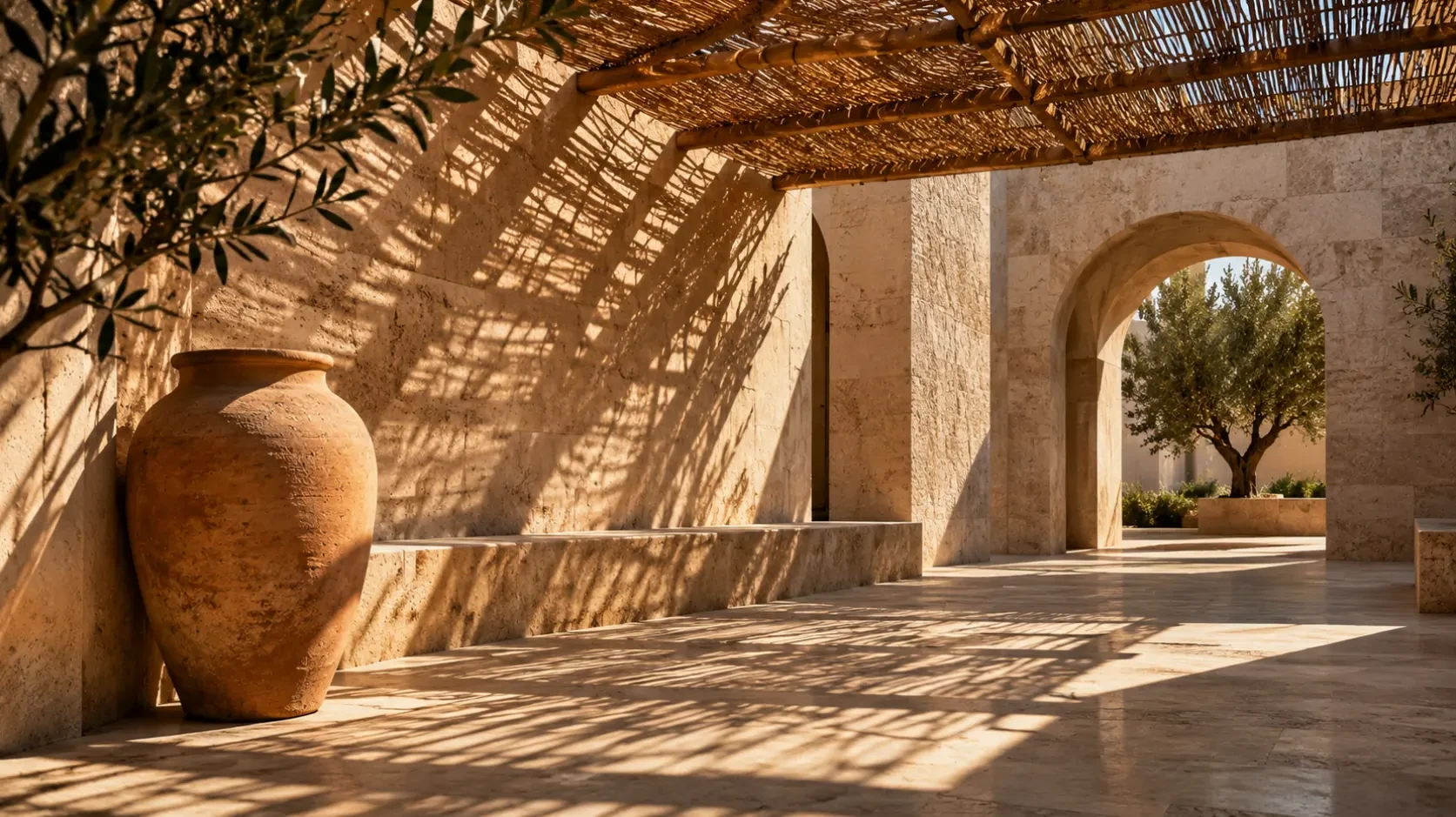
For centuries, architecture in hot climates approached the sun as something to be managed rather than conquered. Narrow passages limited exposure. Courtyards offered shelter from the surrounding heat. Palm fronds, clay vessels, and carefully positioned openings helped regulate comfort long before mechanical cooling became commonplace.
Many of those principles remain relevant. What has changed is the urgency with which designers are being asked to reconsider them.
At the 2026 Design Doha Biennial, which opened November 5 in Qatar, five public installations offer a contemporary interpretation of regional building traditions. Situated within the historic neighborhood of Fereej Al Asmakh, the projects examine how familiar materials and inherited construction techniques might respond to the environmental demands of modern cities.
The work arrives at a moment when cooling is becoming an increasingly consequential question for urban development.
According to the United Nations Environment Programme's Global Cooling Watch 2025, worldwide cooling demand could more than triple by 2050 under a business-as-usual scenario. Without substantial changes in how buildings and cities manage heat, the associated demand for electricity could place considerable pressure on energy infrastructure.
The challenge extends beyond making air conditioning more efficient. It begins with reconsidering how much cooling buildings need in the first place.
The Intelligence of Old Materials
Among the installations presented at Design Doha is Cooling Pots, developed by architects Haitam Daoudi and Óscar Cruz.
The project uses suspended terracotta vessels to create a shaded gathering space. Water absorbed by the porous material gradually evaporates, producing a localized cooling effect while the arrangement of vessels filters direct sunlight.
The underlying principle is familiar throughout regions where earthenware containers have traditionally been used to store and cool water.
Another installation, Palm Construct, by Emirati architect Abdalla Almulla, examines the architectural possibilities of the date palm.
Traditional Qatari construction incorporated palm trunks as structural members, fronds as roofing, and woven leaves as mats. These materials offered relatively lightweight methods of creating shelter while responding to local conditions and available resources.
Almulla's project revisits those techniques through contemporary design and fabrication.
Neither installation suggests that traditional architecture provides a universal solution to extreme heat. The performance of evaporative cooling, for instance, varies significantly with humidity, water availability, and environmental conditions.
Their importance lies partly in what they challenge: the assumption that environmental progress must always begin with a new technological system.
Sometimes it begins by understanding why an older one worked.
The Changing Economics of Comfort
Modern architecture has gained extraordinary freedom through mechanical heating and cooling. Buildings can maintain carefully controlled interior environments across an enormous range of climates.
That freedom has also encouraged architectural approaches that can require substantial energy to remain comfortable.
Large expanses of unshaded glass, heat-absorbing exterior surfaces, and public spaces without adequate shelter can increase exposure to unwanted heat.
As temperatures rise, those design decisions carry growing consequences.
In November 2026, governments attending COP31 in Antalya, Türkiye, backed a voluntary international roadmap addressing extreme heat and sustainable cooling. The initiative emphasizes coordinated approaches that include urban planning, passive design, efficient technology, and access to cooling for vulnerable populations.
More than $20 million in new support was announced alongside the initiative, although its eventual impact will depend on implementation.
The broader policy direction recognizes something architecture has always understood: thermal comfort is shaped by the built environment long before a thermostat is adjusted.
Shade, building orientation, landscaping, and material selection influence how much heat reaches people and buildings. Used appropriately, these approaches can reduce cooling requirements while improving the experience of outdoor spaces.
They are not replacements for mechanical cooling in every setting. Extreme temperatures, health considerations, and local climate conditions still make reliable indoor cooling essential.
The opportunity is to reduce unnecessary demand without compromising safety or comfort.
From Installation to Infrastructure
An architectural installation can demonstrate a compelling idea. Translating that idea into functioning infrastructure is considerably more complicated.
Urban shade must accommodate pedestrian movement, accessibility requirements, maintenance, and long-term durability. Vegetation requires suitable growing conditions and ongoing care. Water-dependent cooling systems introduce questions about consumption, treatment, and local water scarcity.
Even the environmental advantages of traditional materials require careful examination.
Locally sourced products may reduce certain transportation impacts, but their overall performance depends on extraction, manufacturing, lifespan, and replacement requirements.
Those considerations make research and measurable outcomes essential.
A beautifully constructed canopy may provide a welcoming public space without delivering a substantial reduction in ambient air temperature. That distinction matters. Lowering radiant heat exposure and improving pedestrian comfort can be valuable even when a project does not meaningfully cool an entire neighborhood.
Successful heat-responsive architecture requires clarity about what an intervention is intended to accomplish and evidence that it performs accordingly.
The strongest projects will likely be those that integrate environmental considerations into ordinary planning decisions rather than treating them as exceptional architectural gestures.
The Beauty of Necessity
There is a tendency to associate climate-responsive architecture with restraint, as though environmental responsibility necessarily limits creative expression.
The historical record suggests otherwise.
Some of the world's most recognizable architectural traditions emerged through practical responses to climate, geography, and available materials.
Courtyards shaped domestic life. Arcades provided shelter along commercial streets. Deep window recesses moderated sunlight while creating distinctive building facades.
Their beauty was not separate from their utility. It developed alongside it.
The projects at Design Doha offer a contemporary reminder that environmental intelligence can also become a source of architectural identity.
As cities search for ways to remain livable in a warming climate, the most useful design innovations may not always resemble inventions.
Some may look remarkably familiar.
And perhaps that is the more interesting possibility: not a return to the past, but a future informed by the knowledge that modern construction once left behind.